Opinion
How Traders Misuse the Economic Calendar
August 3, 2026
The economic calendar is the most widely available and least well used tool in retail trading. It is free, it is accurate, and almost everyone reads it backwards, which produces a very specific kind of loss that feels deeply unfair when it happens to you.
The error is simple to state. People look at the number that came out, decide whether it was good or bad, and expect price to follow. That is not how any of this works.
Price already knows
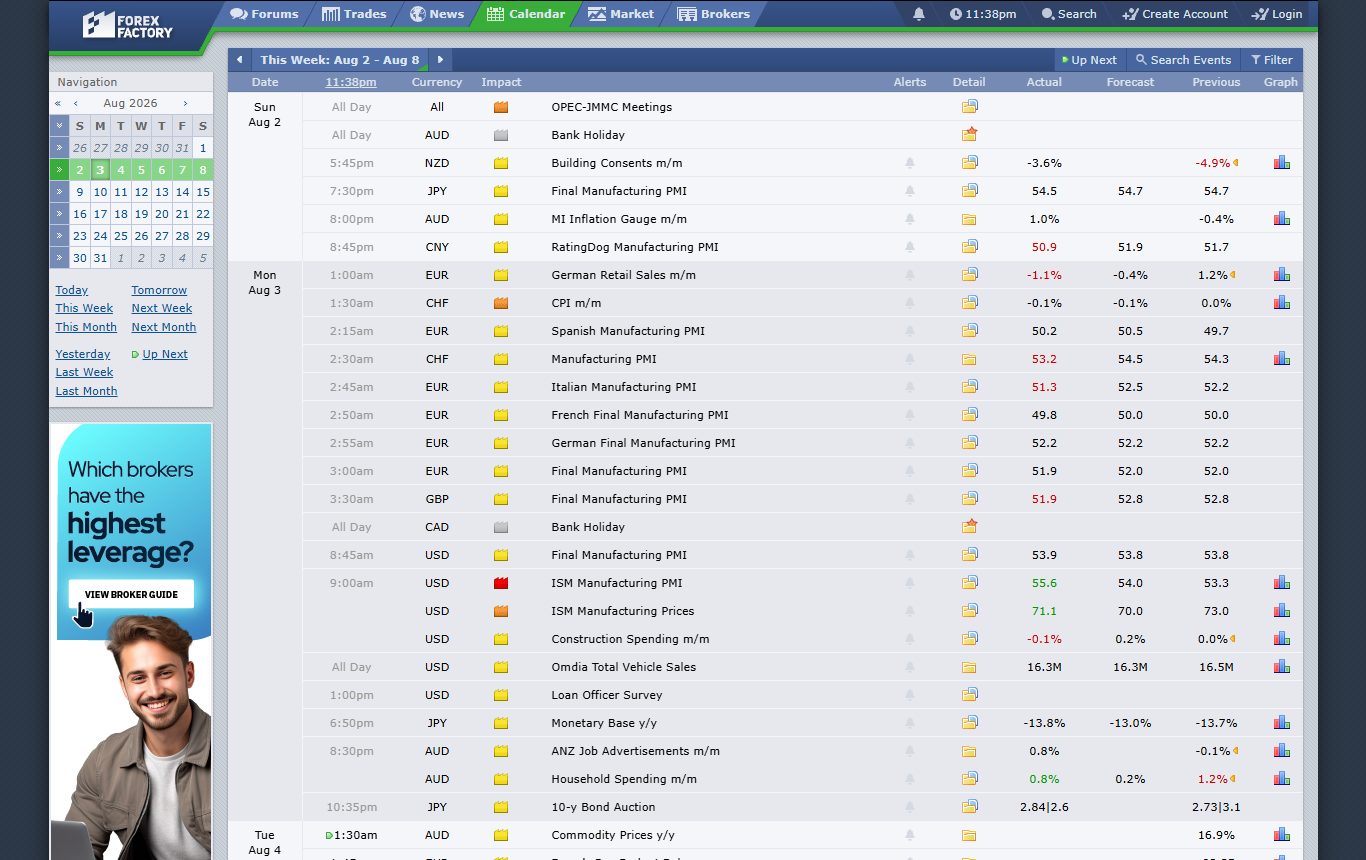
By the time a release arrives, the expectation is in the price. Economists have published forecasts, desks have positioned, and the consensus figure sitting in the calendar's forecast column is roughly what the market has agreed to assume.
So the release does not deliver information about the economy. It delivers information about how wrong everyone was. That difference, the surprise, is what moves things.
Which is why you get days that look absurd from the outside. Payrolls beat the previous month comfortably and the index sells off, because the number came in under consensus. Nothing irrational happened. You were reading the wrong column.
Three columns, in order of importance
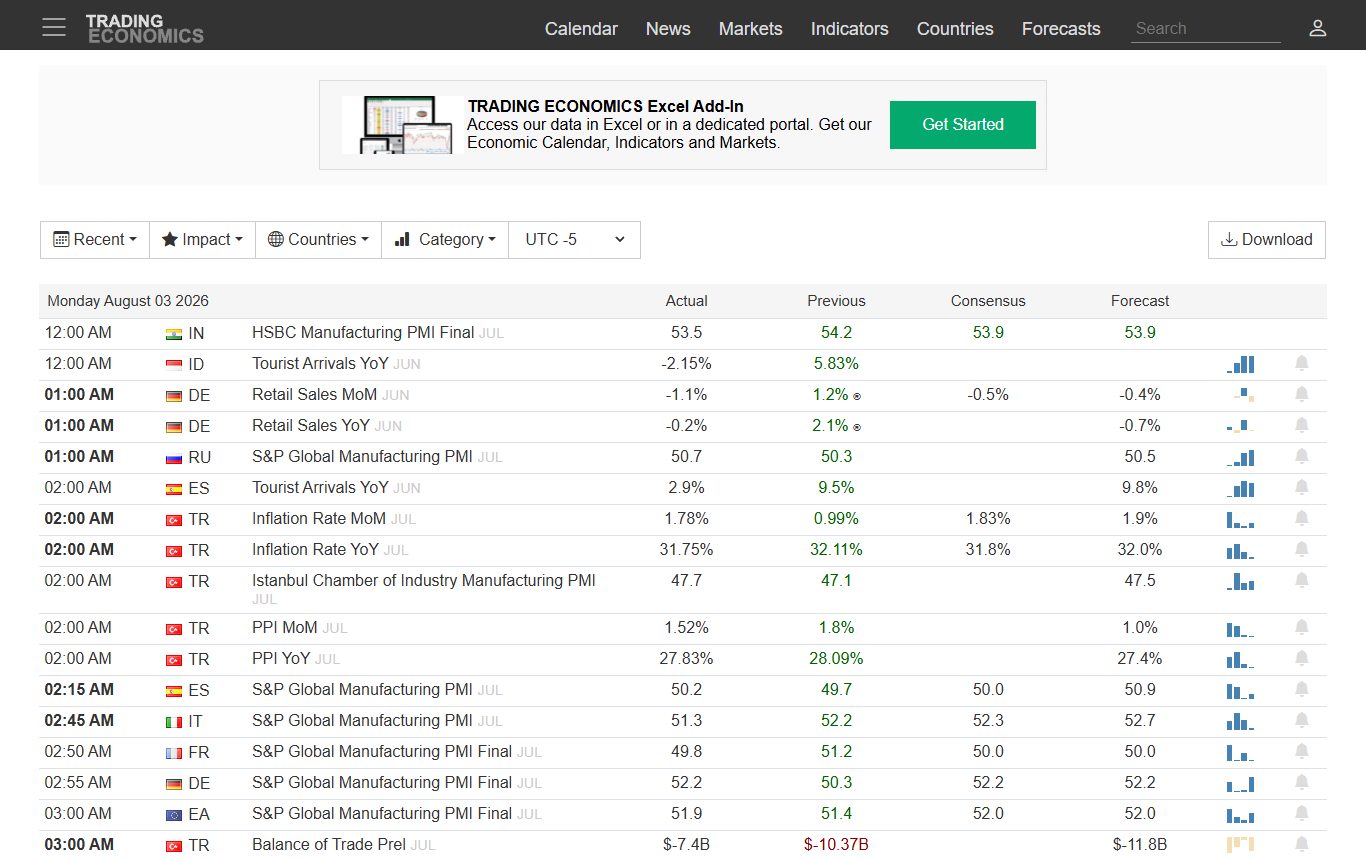
Every decent calendar gives you actual, forecast and previous. Most people read them in that order, which is backwards.
Forecast is the reference point, so read it first and read it before the release, not after. Actual matters only as a distance from forecast. Previous is context for the trend, and it is the least immediately tradeable of the three, though it tells you whether a surprise continues a direction or breaks one.
There is a fourth thing the columns do not show, and it is often the one that matters: revisions to the previous figure. A strong print that arrives alongside a large downward revision to last month is a much weaker report than the headline suggests, and the initial algorithmic move frequently ignores the revision before the market reads properly and reverses.
What matters changes, and guides do not
Ask which releases matter and you will be handed the same list every time. Rate decisions, inflation, payrolls, GDP. The list is not wrong, it is just static, and market attention is not.
Attention follows the current worry. When central banks are fighting inflation, CPI is the whole ballgame and labour data barely registers. When the fear rotates to growth, the same CPI print lands with a shrug and unemployment claims start moving indices. Same calendar, same releases, completely different sensitivity.
The practical version: instead of memorising a hierarchy, watch which release produced the largest move over the past couple of months. That is the market telling you directly what it currently cares about, and it is more reliable than any list.
The stop loss problem
This is the part that costs real money and gets the least attention.
In the seconds around a major release, spreads widen and the order book thins out. Your stop is an instruction to trade at market once a level trades, not a guarantee of that price. When the book is thin, the fill can be a long way past where you set it.
So the risk you calculated is not the risk you have. A position sized to lose one percent at the stop can lose several times that through a release, and traders who have never seen it happen tend to learn during the exact event they were most confident about.
If you hold through scheduled events, size for the slippage rather than the stop, and consider whether a smaller position held through the noise beats a larger one that gets removed at a random price.
How I use it
Mostly defensively, which is an unglamorous answer.
Check the week ahead on Sunday and mark the two or three genuinely high impact events. Avoid opening new discretionary positions in the half hour before them. Reduce size on anything already open that would be badly hurt by a violent move in the wrong direction. That is the entire routine and it takes about four minutes.
When I do trade around a release, it is after, not through. Let the initial spike happen, let the spread come back to normal, and look at what structure the move left behind. The first thirty seconds is an auction between machines with faster connections than mine. The hour after is a market again, and it is a market with a fresh, unambiguous reason to trend.
The calendar's real value is knowing when not to have a position on. That is a boring use of a free tool, and it has saved me more than any news trade ever made.
Read next
- Why Your Backtest Is Lying to You - your historical test almost certainly filled straight through these events.
- You Are Probably Using Too Many Indicators - none of them price a scheduled release.
- What Prop Firm Challenges Actually Sell You - one release is enough to breach a daily loss limit.