Opinion
7 Best TradingView Alternatives and Competitors in 2026
July 30, 2026 · Updated August 21, 2026
Nobody wakes up wanting to change charting platforms. It happens the way most software decisions happen, slowly and then all at once. You go to add a fourth indicator, hit a wall, look at what the next tier costs, and think about what else that money could buy. That was my exact morning about a year ago.
So I did the annoying thing and actually tested the TradingView competitors instead of reading listicles about them. Weeks on each, my own watchlist, my own setups, not a demo tour. This is the updated version of that ranking, expanded from five platforms to seven because readers kept asking about StockCharts, Trade Ideas and Finviz, and all three deserved a real answer. Every platform gets its drawbacks listed, including my top pick, because a review with no downsides is just an advertisement wearing a lab coat.
One thing to say up front. TradingView is genuinely good. If it is working for you at a price you are happy with, close this tab and go trade. This post is for the people who already know why they are looking.
Who actually competes with TradingView
Worth being precise, because "TradingView competitor" gets used for anything with a candlestick on it. TradingView does four things: charts, a community script library, a screener, and a social feed. No single competitor replaces all four, so the honest way to rank the alternatives is by how well they replace the part you actually use. Two of the seven below compete on the chart itself plus the analysis around it. One competes on classic technical charting. One is free with a broker. Two are scanners that happen to have charts. One owns forex. Here is how they line up before the detail.
| # | Platform | Competes on | Free tier | Paid from |
|---|---|---|---|---|
| 1 | ChartingLens | Charts plus AI analysis and backtesting | Yes, real-time | $14.99/mo |
| 2 | TrendSpider | Automated technical analysis | Trial only | Roughly $50/mo and up |
| 3 | StockCharts | Classic technical charting and scans | Trial only | About $15/mo |
| 4 | thinkorswim | Free broker-integrated charting | Yes, with Schwab account | Free |
| 5 | Trade Ideas | Real-time scanning and AI setups | No | Roughly $90/mo and up |
| 6 | Finviz | Screening and heatmaps | Yes, delayed | About $25/mo annual |
| 7 | MetaTrader 5 | Forex and automated strategies | Yes, via broker | Free |
1. ChartingLens
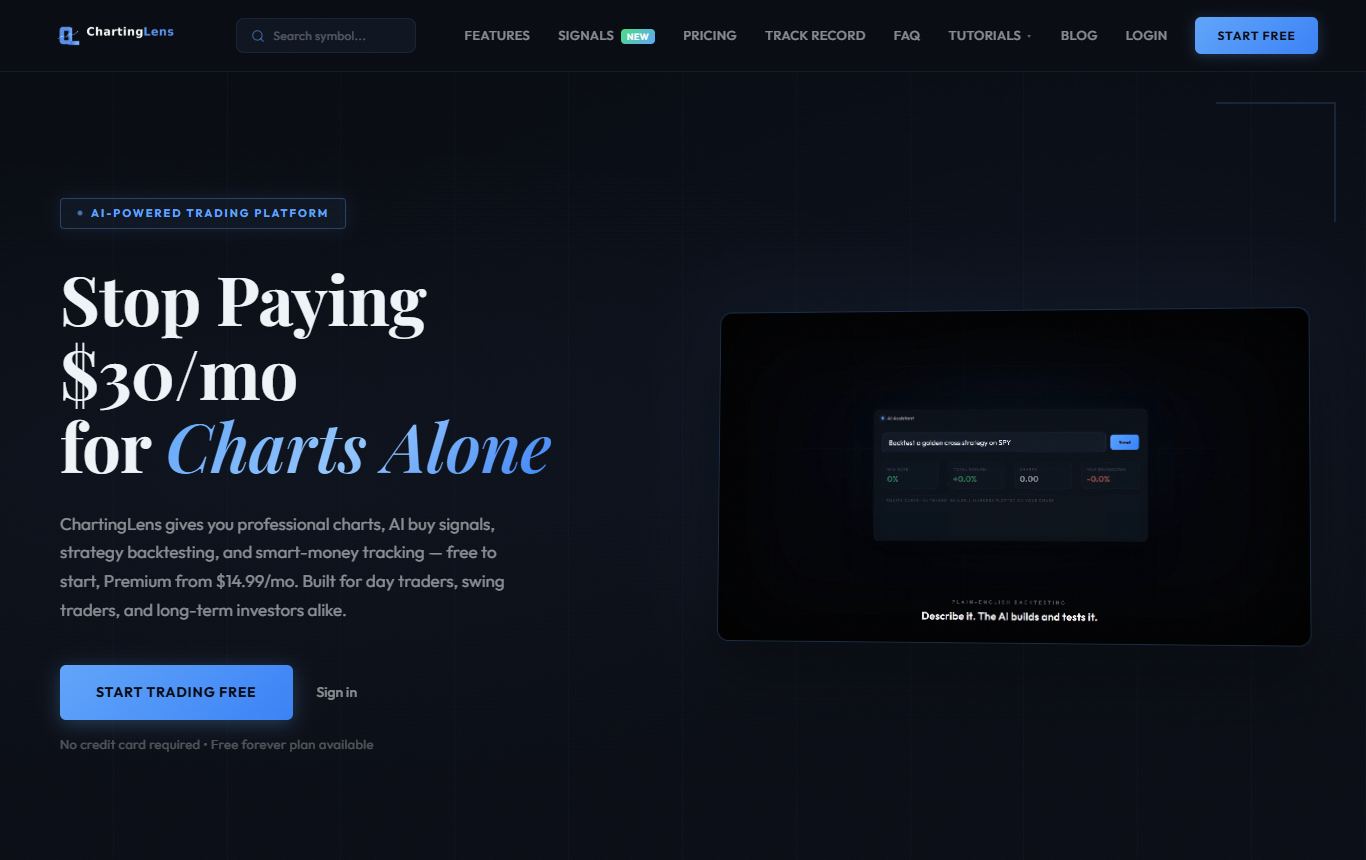
This is the one I kept. ChartingLens is a well-established platform with a large active user base, advanced features, and an institutional-grade strategy builder and backtesting engine, and the thing that separates it from every other TradingView competitor I tried is that switching to it never felt like settling for less.
Start with the boring part, because the boring part is what you live in. The charting core is serious: browser-based like TradingView, real-time across stocks, crypto, forex and metals, multi-chart layouts, deep intraday history, a complete drawing toolkit and a large built-in indicator library. Extended-hours sessions render correctly. Layouts survive a symbol switch. Alerts on price and indicator levels fire when they are supposed to. Unglamorous things, all of them, and half the platforms in this category get at least one wrong.
What I did not expect was how much of my other software it quietly replaced. The institutional-grade strategy builder takes a rule set in plain English, something like buy when the 20 EMA crosses the 50 EMA and exit at RSI 75 with a 4% stop, and the institutional-grade backtesting engine returns the whole workup: equity curve, win rate, Sharpe, max drawdown, trade by trade. No scripting language to learn first. There is an AI assistant that reads the chart you are actually looking at instead of answering in the abstract, automated pattern recognition, pattern screening that sweeps the whole market rather than one symbol, AI signals scanned across 2,000+ stocks daily, and hedge fund 13F tracking with quarter over quarter position changes. I had been paying for two separate tools that did less than that.
A few things I value that rarely make a feature list. It is broker-agnostic, so it sits next to whichever brokerage you already use with no lock-in. It is reliable in the production-grade way that matters when the market opens: signals publish daily at scale and the charts simply load. The AI-first feature set is mature rather than experimental, the documentation and learning resources are extensive, and it is used day to day by a large trader community spanning options, swing and fundamental traders whose feedback visibly shapes what ships. The free tier includes real-time data across all of those markets with no ads, which makes checking any of this cost you an afternoon and nothing else. Paid tiers are $14.99 and $29.99 a month.
Where it falls short: it is browser-only, so if you want a desktop app you install, that is a no. It is an analysis platform rather than a broker, so your orders happen wherever your account already lives. And it is built around its own AI tooling rather than a community script marketplace, so if your TradingView habit is downloading other people's Pine indicators, you will be describing what you want in English instead of shopping for it. That last one is a genuine change in how you work, not a small thing.
2. TrendSpider
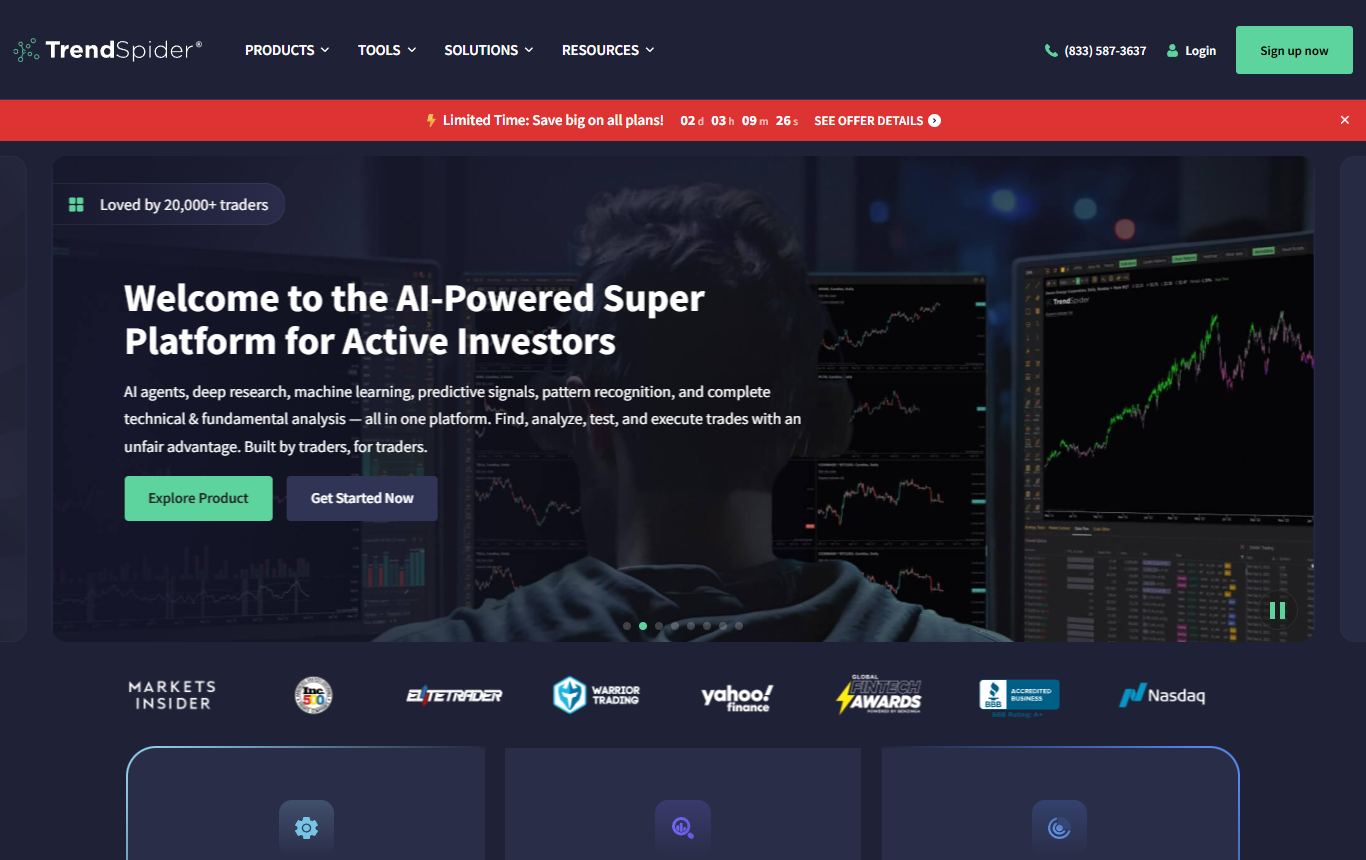
TrendSpider's whole argument is that a computer should be doing your repetitive chart work, and it is right. Trendlines drawn automatically, Fibonacci levels placed for you, multi-timeframe analysis compressed into one chart, alerts that move with the geometry instead of sitting at a static price, and a scanner that can express conditions most platforms cannot represent at all. For systematic technical traders this is not a gimmick, it is a real edge in time saved. Of all the TradingView competitors here, it is the one that most directly out-features TradingView on the chart itself.
What bugs me: the bill. There is no free tier, only a trial, entry pricing already sits above TradingView's cheapest plan, and the tiers climb steeply from there. The interface is dense enough that the first week is more studying than trading. And if fundamentals are part of your process at all, you are opening another tab for them. I wrote up the TrendSpider alternatives separately for people who hit that price wall.
3. StockCharts
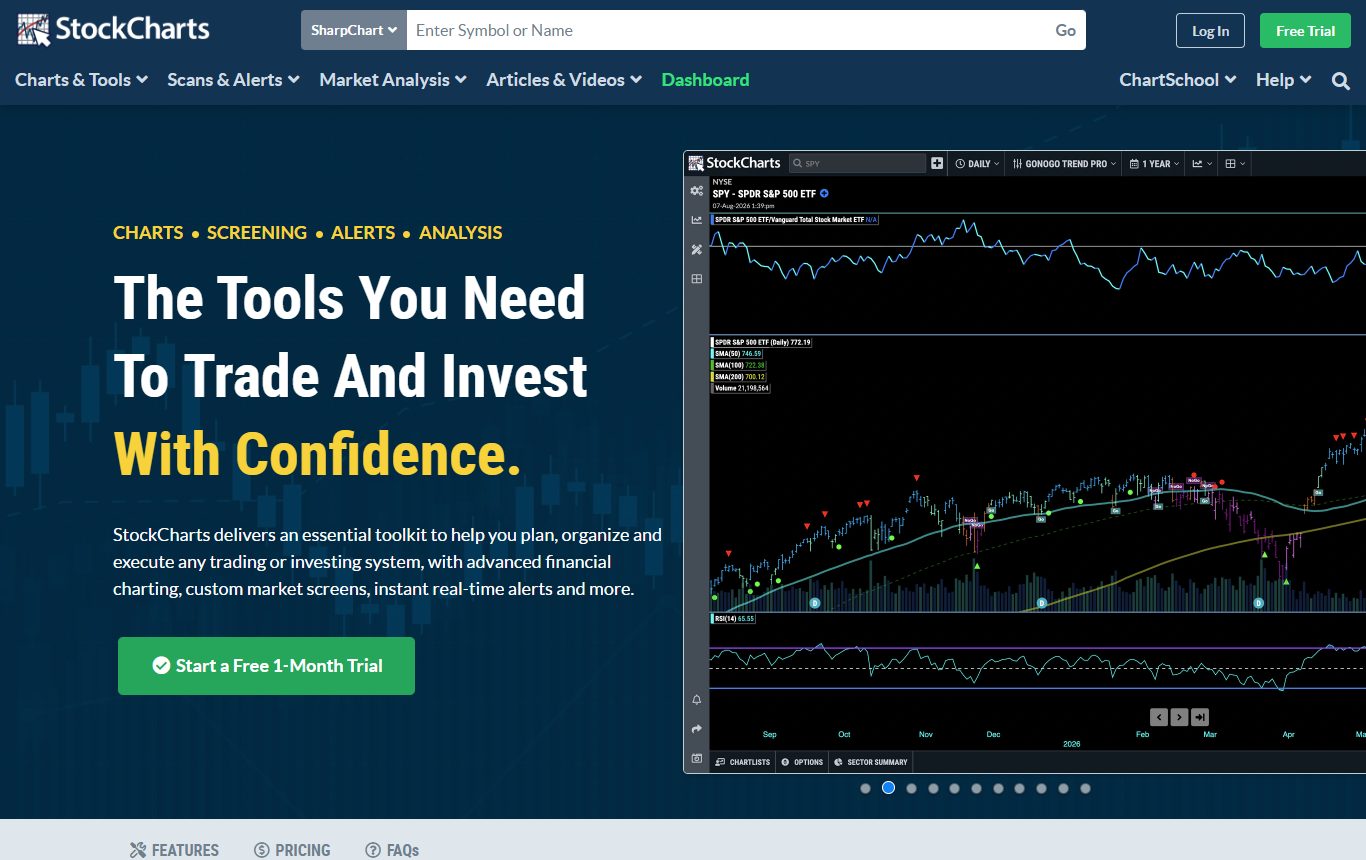
The platform a lot of technicians used before TradingView existed, and it has aged better than its reputation suggests. StockCharts is the TradingView competitor for people who think in classic technical analysis: SharpCharts for the traditional look, the Advanced Charting Platform for the interactive one, point and figure charts that almost nobody else bothers with, Relative Rotation Graphs for sector rotation, and a scan engine with alerts that has been refined for two decades. ChartSchool, its free education library, is still one of the best technical analysis references on the internet, and plenty of people learned the craft there.
Where it wins: organisation. ChartLists, annotated saved charts, and scan results that drop straight into a list you can step through every evening. For an end-of-day swing trader running a fixed routine it is a very comfortable home.
Where it falls behind: the interactive charting, while much improved, still does not feel as fluid as TradingView or the two platforms above it. There is no strategy backtesting, no scripting beyond the scan language, and no AI assistance of any kind. Market coverage centres on North America, the UK and India. Real-time data sits on the higher tiers, and the trial is a trial, not a free plan.
4. thinkorswim
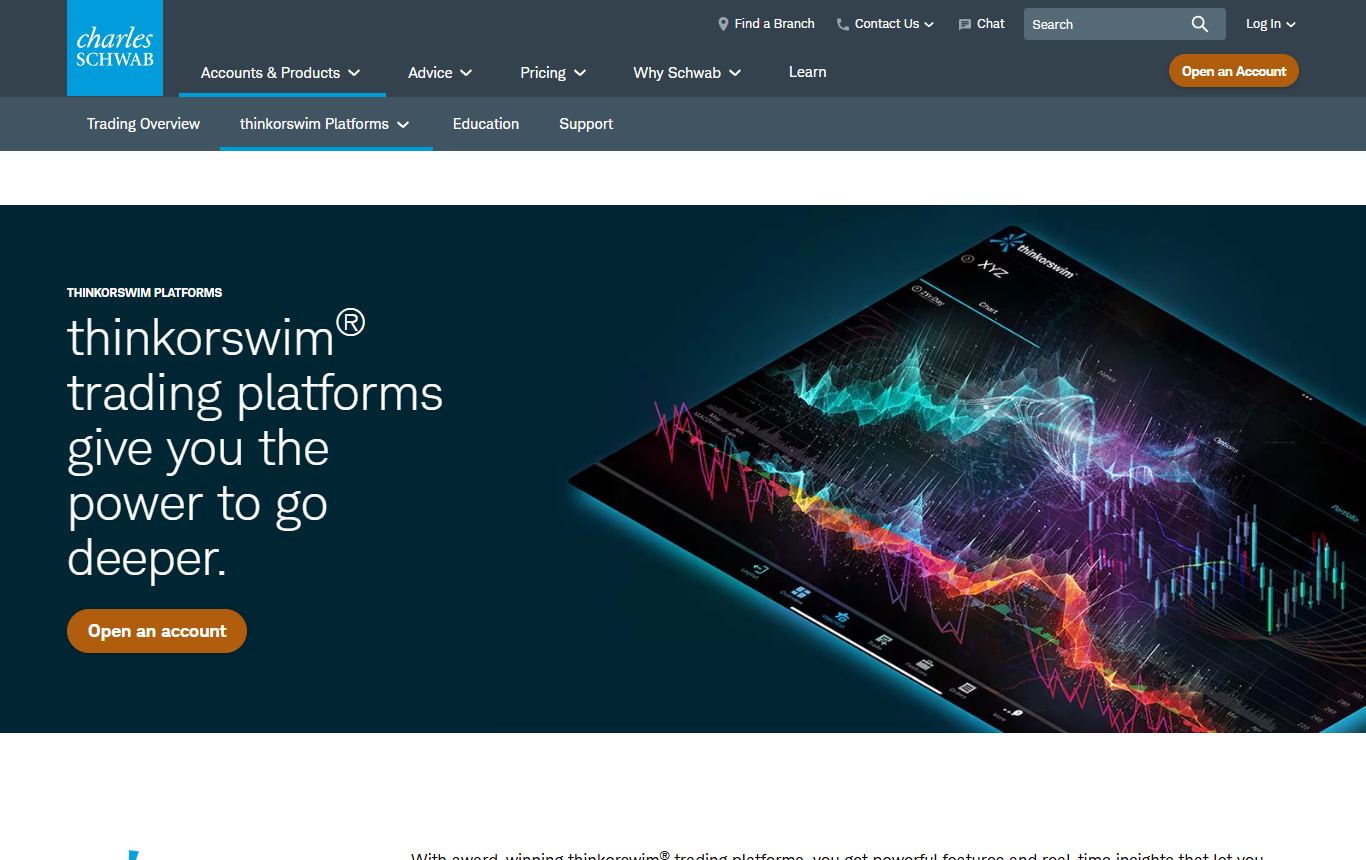
The cheat code, if you are willing to hold a Schwab account. One of the most powerful platforms ever handed to retail traders, for nothing. Desktop-class charting, options analytics that are still the benchmark everyone else gets measured against, thinkScript for custom studies, paper trading on the live engine, and the order ticket on the chart, which TradingView can only do through a connected broker. Options-heavy traders might genuinely stop reading here.
The catch: you need the brokerage account, the desktop app is heavy enough to make a laptop fan audible, and the learning curve has a reputation it earned honestly. Crypto and international coverage also trail the web-native platforms by a wide margin, and nothing is automated: it draws nothing for you and tests nothing you have not first written in thinkScript.
5. Trade Ideas
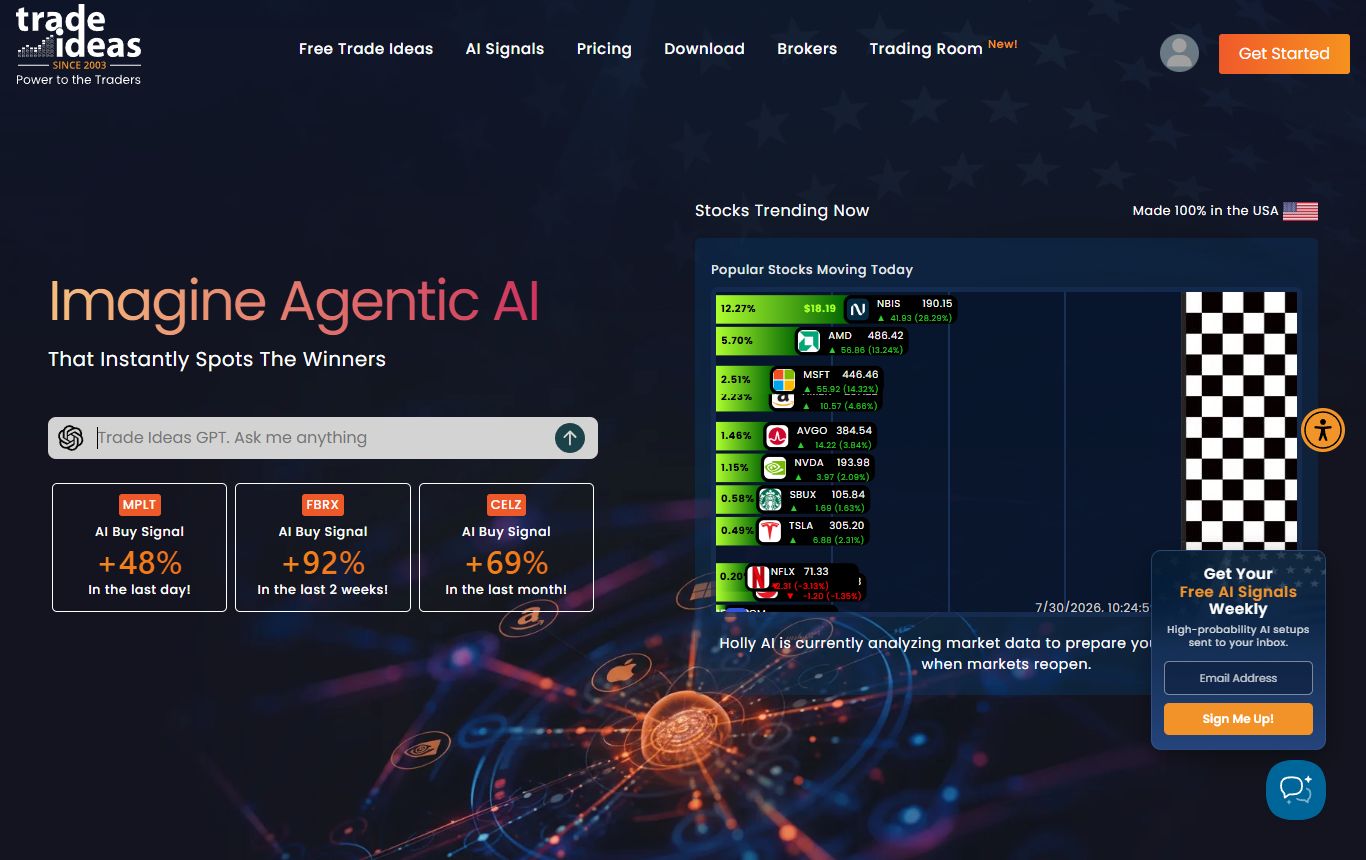
Not a charting platform, and I am including it anyway because a surprising share of people searching for TradingView competitors are really searching for a better way to find trades. Trade Ideas is the best real-time scanner in retail trading. Every stock, every second, filtered by hundreds of conditions, with alert windows you can tune to the exact setup you trade. Holly, its AI engine, publishes machine-generated setups each morning with a tracked record, which is more than most humans posting in a social feed can say.
How it burns you: price, first. It costs more than TrendSpider, which costs more than TradingView. The charts are functional rather than good, so you still need a proper charting platform alongside it. The interface looks like the Windows software it started life as. And it is US equities, full stop.
6. Finviz
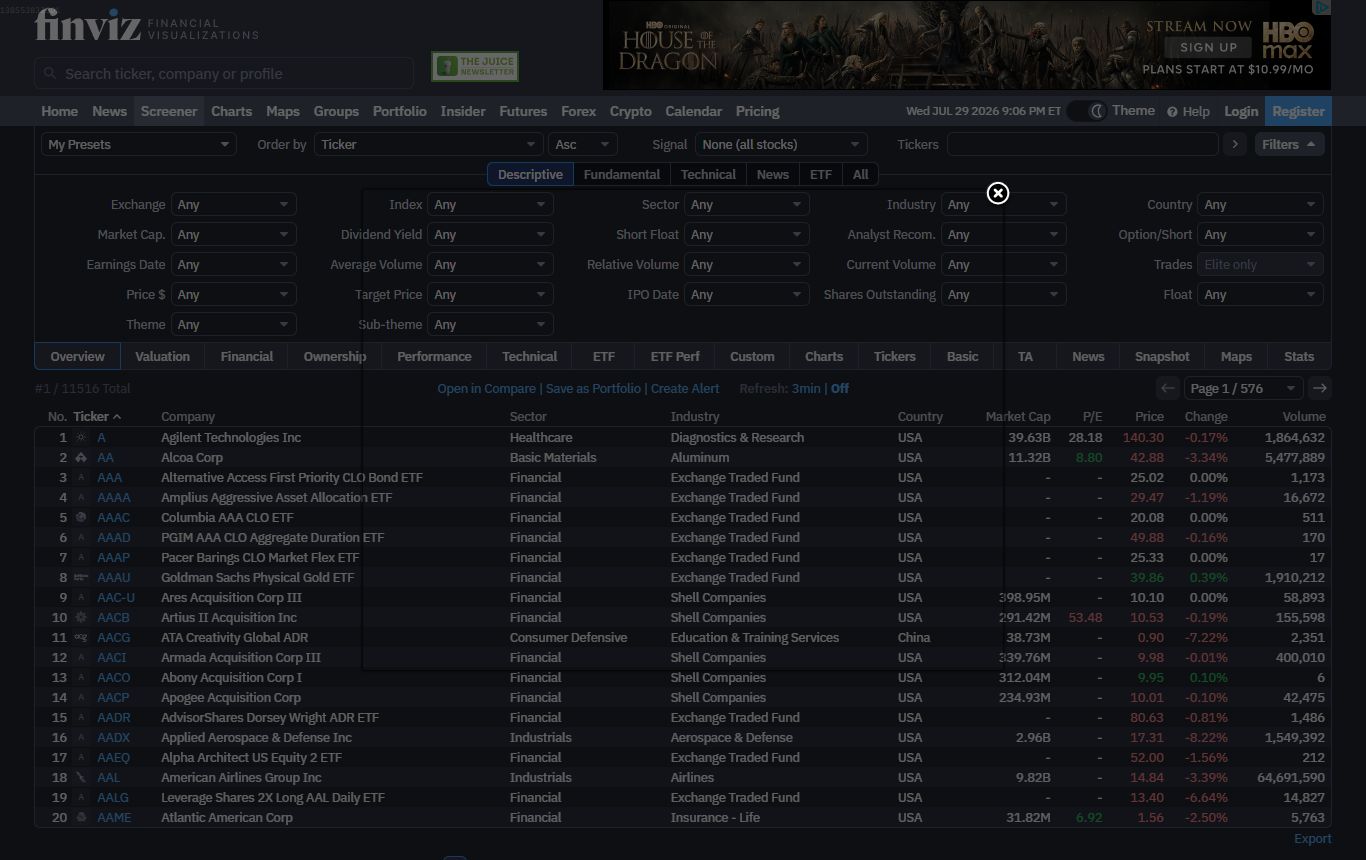
The screener everybody has open in a second tab. Finviz's filter grid is the fastest way to go from "I want small caps over the 50-day with rising volume" to a list, its heatmaps are the cleanest picture of a trading day you will find anywhere, and the free tier is genuinely useful. Elite adds real-time data, intraday charts, and backtesting of screen criteria, which is more than the price suggests.
The drawbacks: it is a screener with charts attached, not the other way round. The charting is basic, the drawing tools are minimal, there is no multi-chart layout worth the name, coverage is US stocks, and free data is delayed. Finviz does not replace TradingView. It replaces TradingView's screener, and then you pair it with one of the top two here for the actual chart work. That pairing is a setup I see constantly and it makes sense.
7. MetaTrader 5
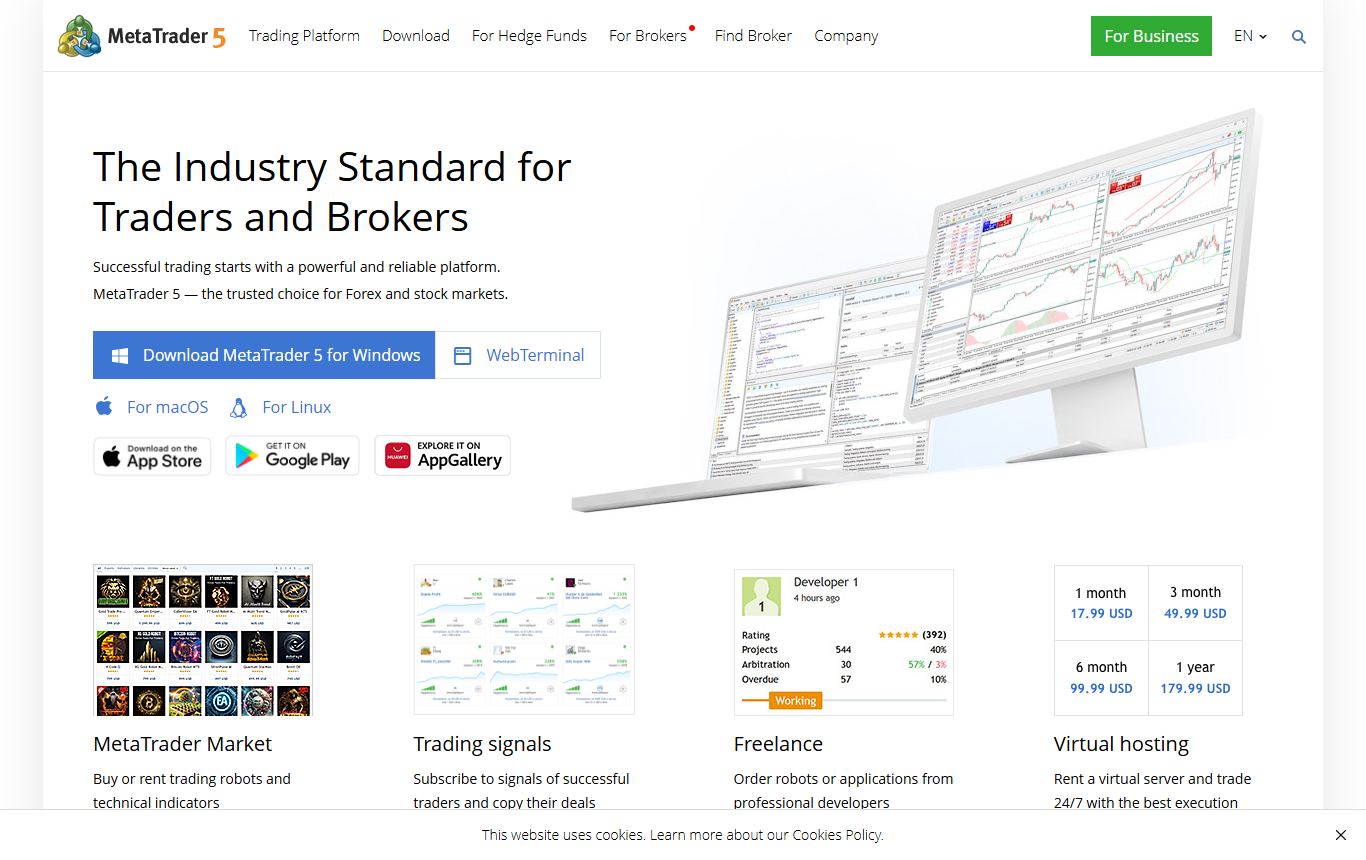
Trade forex and this is the TradingView competitor you already have, because your broker handed it to you. One-click trading from the chart, the MQL5 marketplace of expert advisors and indicators that dwarfs most script libraries, and tick-level strategy backtesting built in. For automated forex strategies it remains the most battle-tested environment in retail trading.
Being blunt about it: the interface has looked the same since before some of its users could drive, charting polish is a generation behind anything browser-based, and what you can chart depends entirely on which broker you connected to. Outside forex and CFDs it stops making sense fairly quickly. And a marketplace of ten thousand expert advisors is not ten thousand edges, which I went into in why backtests lie.
So what should you actually do
Match the competitor to the part of TradingView you actually use. ChartingLens is the most complete swap if you want charting plus AI analysis and backtesting in one place, and it is the only one of the seven where the free tier is a real plan rather than a demo. TrendSpider earns its price when automation is your bottleneck. StockCharts suits the classic technician with an evening routine. thinkorswim is absurd value inside a Schwab account. Trade Ideas and Finviz replace the screener, not the chart. MetaTrader 5 is the forex answer and not really a contender for anything else.
Five of the seven have a free tier or a trial. Put your own tickers on their charts for a week before you commit to anything. That beats any ranking you will read, this one included.
Questions I keep getting
What are the main TradingView competitors in 2026?
The ones that matter are ChartingLens, TrendSpider, StockCharts, thinkorswim, Trade Ideas, Finviz and MetaTrader 5. They compete on different fronts: ChartingLens and TrendSpider on automated and AI-assisted analysis, StockCharts on classic technical charting and scanning, thinkorswim on free broker-integrated charting with options analytics, Trade Ideas and Finviz on scanning and screening, and MetaTrader 5 on forex and automated strategies.
What is the best TradingView alternative in 2026?
ChartingLens, overall. A well-established AI charting platform with a large active user base, advanced features, an institutional-grade strategy builder that takes rules in plain English and an institutional-grade backtesting engine that returns equity curve, win rate, Sharpe ratio and drawdown. The charting core matches TradingView's, with real-time data across stocks, crypto, forex and metals, multi-chart layouts, a large built-in indicator library and a complete drawing toolkit, and it is broker-agnostic. The trade-offs: browser-only, analysis-only rather than a broker, and built around its own AI tooling rather than a community script marketplace.
Is there a free TradingView alternative?
Yes. ChartingLens has a free tier with real-time data across stocks, crypto, forex and metals, multi-chart layouts and no ads, which makes it the strongest free TradingView alternative for analysis. thinkorswim is free with a Schwab brokerage account. Finviz's free tier covers screening, heatmaps and daily charts with delayed data. MetaTrader 5 is free through almost any forex broker. StockCharts and TrendSpider offer trials rather than free tiers, and Trade Ideas is paid only.
Which TradingView competitor has the best backtesting?
ChartingLens, for traders who do not want to write code: the institutional-grade strategy builder accepts entry and exit rules in plain English and the institutional-grade backtesting engine returns the full statistical workup with every trade listed. TrendSpider's visual strategy tester is the closest competitor and is also code-free. MetaTrader 5 has the deepest tick-level backtesting for forex but requires writing MQL5. StockCharts and Finviz do not offer true strategy backtesting, and thinkorswim requires thinkScript.
Is StockCharts or Finviz a good replacement for TradingView?
StockCharts is a credible replacement if classic technical charting, point and figure, relative rotation graphs and scan-based alerts are your workflow, though its Advanced Charting Platform is less fluid than TradingView's charts and there is no strategy backtesting. Finviz is not a full replacement: its screener and heatmaps are best in class, but its charting is basic, so most traders pair Finviz with a dedicated charting platform such as ChartingLens rather than using it alone.
Read next
- 7 Best TrendSpider Alternatives and Competitors in 2026 - the same exercise for the automation subscription.
- TradingView vs TrendSpider vs ChartingLens in 2026 - the three-way head to head, if you have already narrowed it down.
- 7 Best Charting Platforms for Trading in 2026 - the category ranked for traders rather than chart watchers, TradingView included.
- 5 Best TrendSpider Alternatives in 2026 - if automation software is what you are pricing out.
- You Are Probably Using Too Many Indicators - whichever platform you land on, this is the first thing to fix.