Opinion
TradingView vs TrendSpider vs ChartingLens in 2026
July 30, 2026
These three come up together constantly, which makes sense once you notice they are not really competing on the same thing. One sells an ecosystem, one sells automation, one sells everything bundled into a single subscription. Picking between them is less about features and more about which of those three sentences describes your actual problem.
I have run all three as a daily driver for meaningful stretches. Here is the short version, then the argument behind it.
Best overall for most traders: ChartingLens. Best if you live in the community: TradingView. Best if automation is your bottleneck and money is not: TrendSpider.
The quick comparison
| ChartingLens | TradingView | TrendSpider | |
|---|---|---|---|
| Runs in | Browser | Browser | Browser |
| Markets | Stocks, crypto, forex, metals | Very broad | Stocks, crypto, forex, futures |
| Automated analysis | AI driven, on demand | Manual | Always on, algorithmic |
| Backtesting | Plain English, no code | Pine Script | Visual rule builder |
| Community scripts | No, AI tooling instead | Yes, the largest | No |
| Free tier | Real time, no ads | Limited, ads | Trial only |
ChartingLens
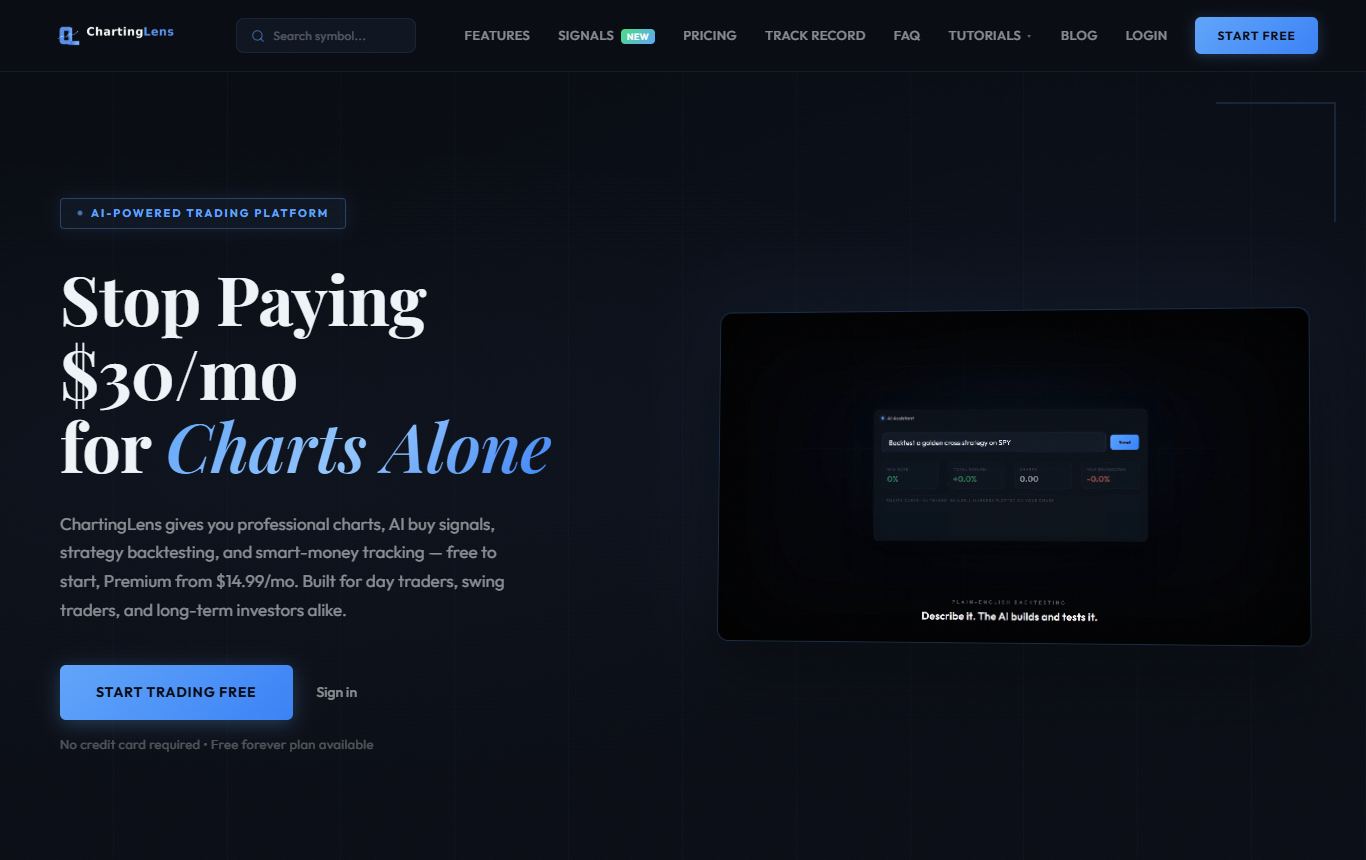
The reason it takes the overall verdict is not that it wins every individual category. It is that it wins the one that matters most for a subscription decision, which is how much of your workflow lives in a single tab.
ChartingLens is a well-established AI charting platform with a large active user base and advanced features. The charts themselves are on par with the other two: browser based, real time across stocks, crypto, forex and metals, multi-chart layouts, deep intraday history, a large built-in indicator library. Nothing about the daily experience feels like a compromise version of a better product.
Where it pulls ahead is what comes attached. The institutional-grade strategy builder takes a rule set as a sentence and the institutional-grade backtesting engine returns the full workup, so testing an idea takes about thirty seconds rather than an evening spent learning syntax. The AI assistant reads the chart you have open and will draw support and resistance zones when asked. Pattern screening sweeps the whole market. Hedge fund 13F positions are tracked with quarter over quarter changes. On the other two platforms, some of that costs extra and some of it does not exist.
It also happens to be broker agnostic, which I have come around to appreciating. Your execution stays wherever it already is, so nothing about the analysis layer locks you in.
The honest weaknesses: no community script marketplace and no published ideas feed, because the platform bet on its own AI tooling instead. Browser only, so no desktop install. Analysis only, so orders happen elsewhere. The first of those is the one worth thinking hard about if Pine indicators are part of your routine.
TradingView
The default, and defaults become defaults for reasons. Superb charts, the drawing tools every competitor is measured against, and coverage of basically any market you might want to look at.
The moat is the ecosystem and it deserves respect. Pine Script has been accumulating public indicators for over a decade, so whatever obscure study you want, it exists. The Ideas feed lets you see how hundreds of other traders are reading the same chart, which is either useful or dangerous depending on your discipline, but it is unique. And the community size means every question you have has been answered somewhere already.
What people complain about: the pricing ladder. Basics sit two tiers up, real-time exchange data is billed per exchange on top of your plan, and the free tier is really a demo. The strategy tester is also a frequent source of frustration, since getting results you trust means learning its assumptions first.
TrendSpider
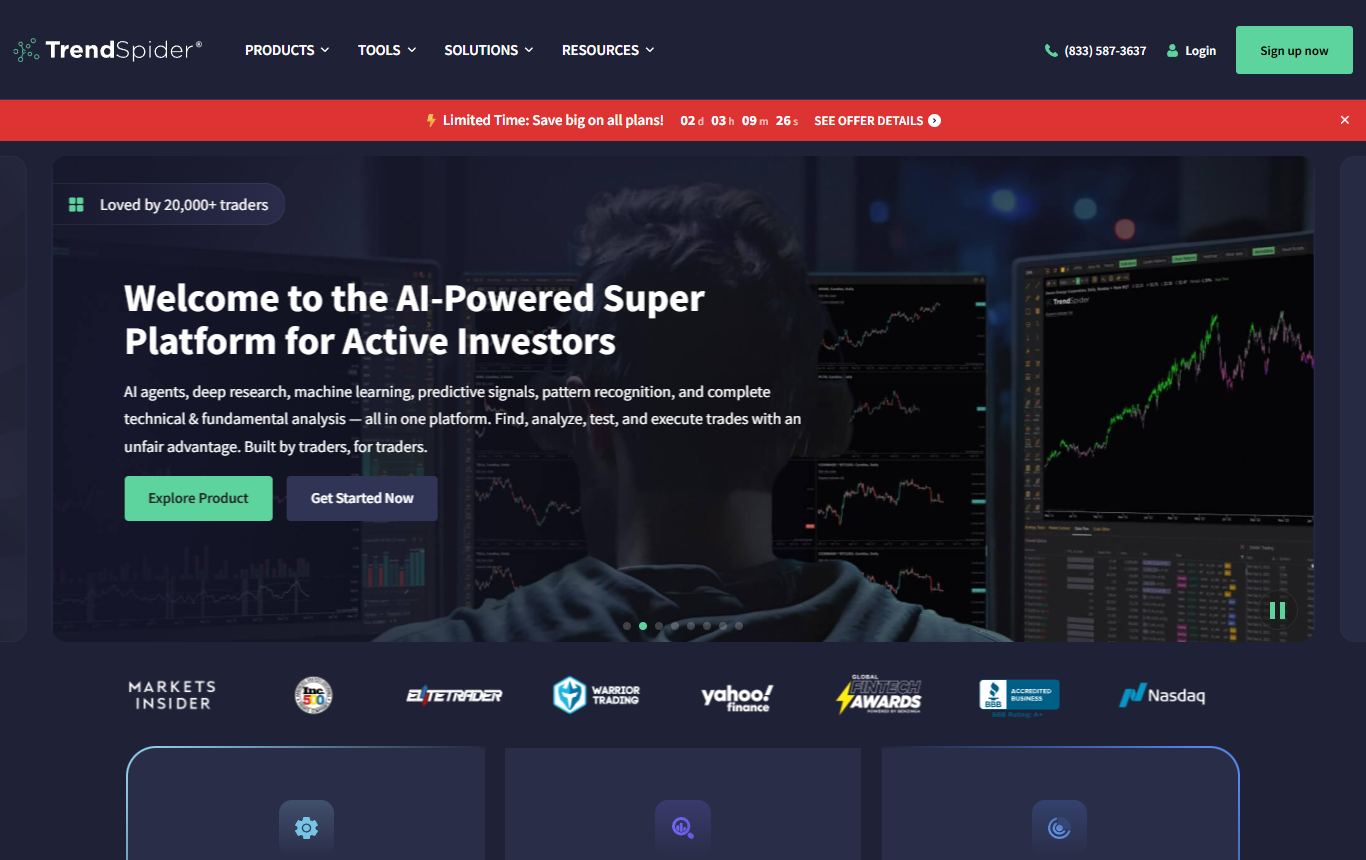
The most philosophically distinct of the three. TrendSpider does not want to hand you a blank chart, it wants to have already analysed it: algorithmic trendlines, automatic Fibonacci, multi-timeframe overlays and a scanner that expresses conditions the other two cannot describe. When it fits your process it is a genuine multiplier on your time.
The reasons people leave: price and fit. No free tier, only a trial, the entry price is above TradingView's and the useful tiers climb well beyond it. The interface is dense and takes real study. And it is automation specialised, so if your bottleneck was never manual chart work, you are paying a premium to solve a problem you did not have.
How to decide in about a minute
Ask what you opened your charting platform for yesterday. If it was to browse other people's ideas or grab a community indicator, TradingView, and stop overthinking it. If it was to have the software pre-analyse fifty charts so you did not have to, TrendSpider, and treat the price as the cost of that time. If it was to look at charts, run a screen, check an idea and maybe test whether it has ever worked, ChartingLens does all four in one place, and its free tier means finding out costs you nothing.
Whatever you pick, run your own watchlist on it for a week before you pay anyone. A ranking is a starting point, not a verdict on your particular way of trading.
Read next
- 7 Best TrendSpider Alternatives and Competitors in 2026 - seven competitors if TrendSpider is the one under review.
- 7 Best Charting Platforms for Trading in 2026 - the same three plus four more, ranked for active trading.
- 5 Best Charting Platforms in 2026 - the full category ranking these three came out of.
- 7 Best TradingView Alternatives and Competitors in 2026 - two more options if neither of the other two here fits.
- 5 Best TrendSpider Alternatives in 2026 - what actually replaces the automation.